

New Publication – When AI Feels Human: 5 Ways To Teach Students About Anthropomorphism, TeachThought
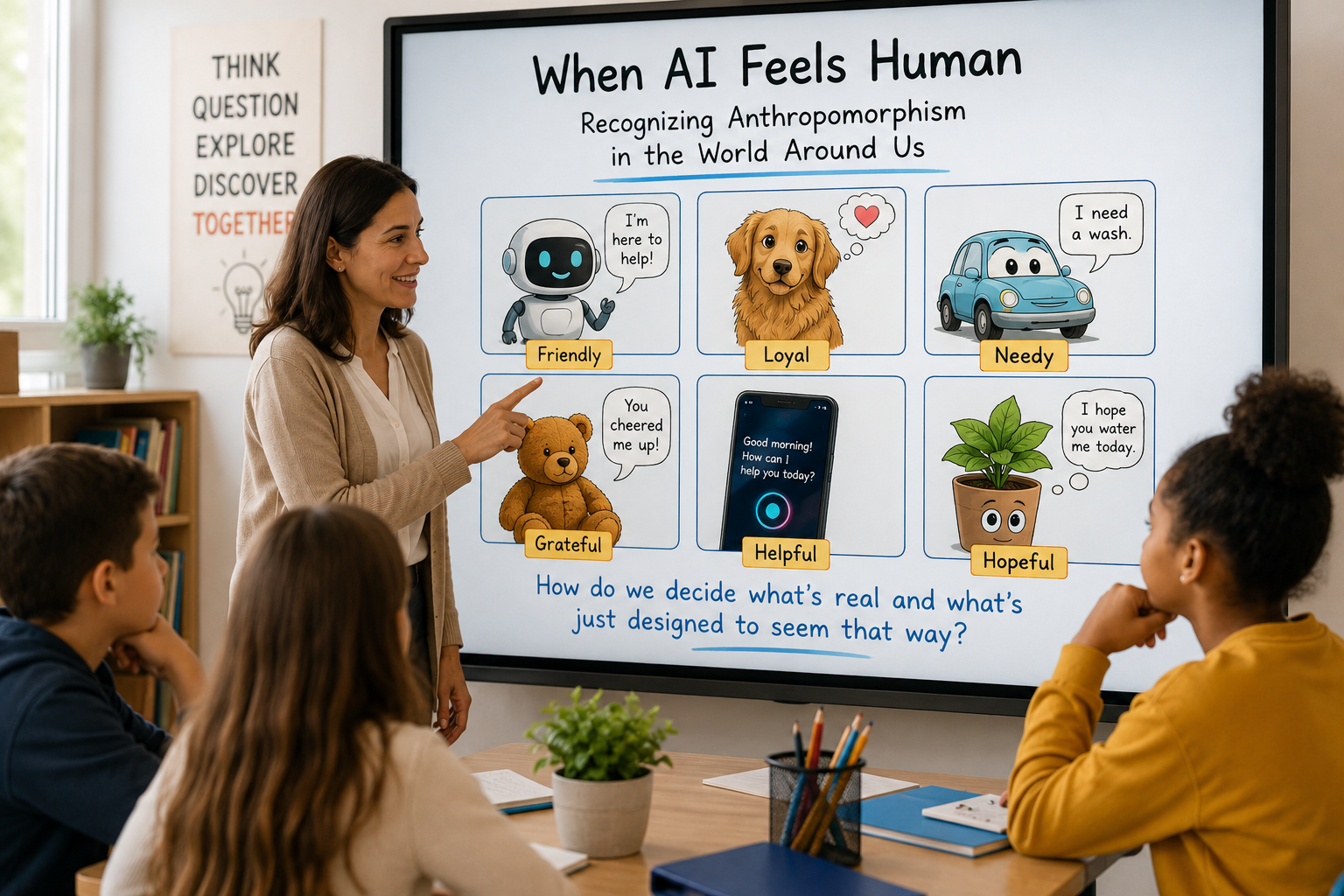
Image generated with ChatGPT
Athena Global Learning (AGL) is pleased to share that our Founder and CEO, Dr. Athena Stanley, has a new article published with TeachThought.
Titled When AI Feels Human: 5 Ways To Teach Students About Anthropomorphism, the article explores an emerging challenge in AI literacy: helping students recognize when AI sounds human without confusing it for a human.
As conversational AI becomes more common in classrooms and everyday life, students increasingly encounter tools that communicate in ways that appear caring, knowledgeable, or even friendly. This article argues that AI literacy must include explicit instruction on anthropomorphism: the human tendency to attribute emotions, intentions, relationships, and other human qualities to non-human entities.
The article presents five practical classroom strategies that help students move from recognizing anthropomorphism in everyday life to identifying it in AI interactions, distinguishing between feeling and function, revising anthropomorphic AI language, and evaluating persona prompts. Together, these approaches encourage learners to think critically about AI while maintaining appropriate trust in its capabilities.
The article reflects AGL's ongoing commitment to human-centered AI literacy and responsible AI education. As AI becomes more integrated into teaching and learning, students need more than technical skills. They need the judgment to recognize what AI is, what it is not, and how human thinking shapes the way we interact with it.
We are grateful to the TeachThought team for continuing to foster thoughtful conversations about education, technology, and the future of learning.
Read the full article on TeachThought:
https://www.teachthought.com/education-posts/teach-students-when-ai-feels-human
At Athena Global Learning, we remain committed to helping educators, schools, and organizations build AI literacy that promotes critical thinking, responsible AI use, and a deeper understanding of human-centered technology.
