

Explore resources designed to help you learn, grow, and thrive in an AI-driven world.
Printables
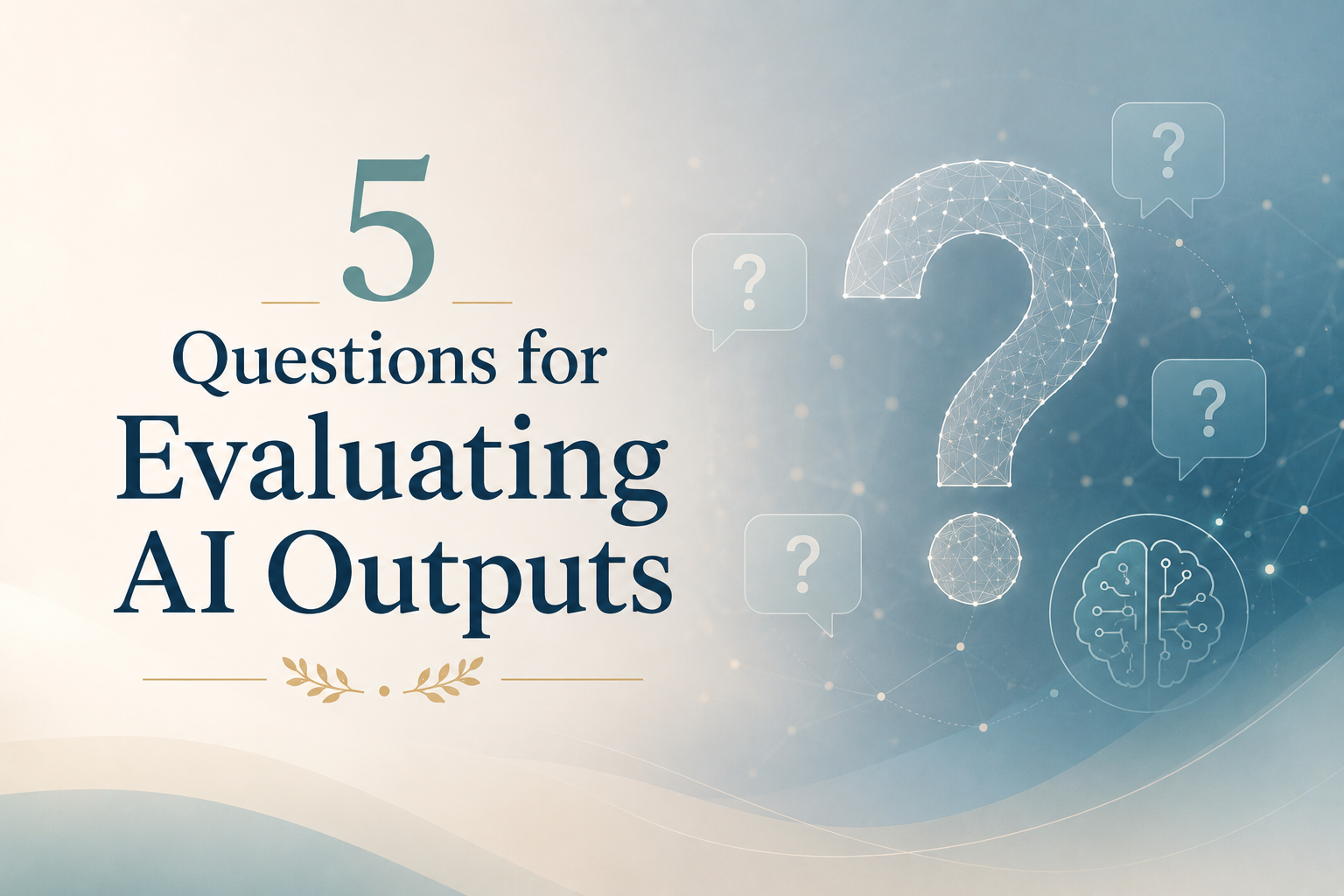
When engaging with LLMs, chatbots, and other interactive AI tools, users should ask questions that help verify accuracy, surface assumptions, and strengthen critical thinking. Our 5 Questions framework encourages learners, educators, and professionals to question AI outputs rather than accept them at face value, helping AI support human judgment instead of replace it.
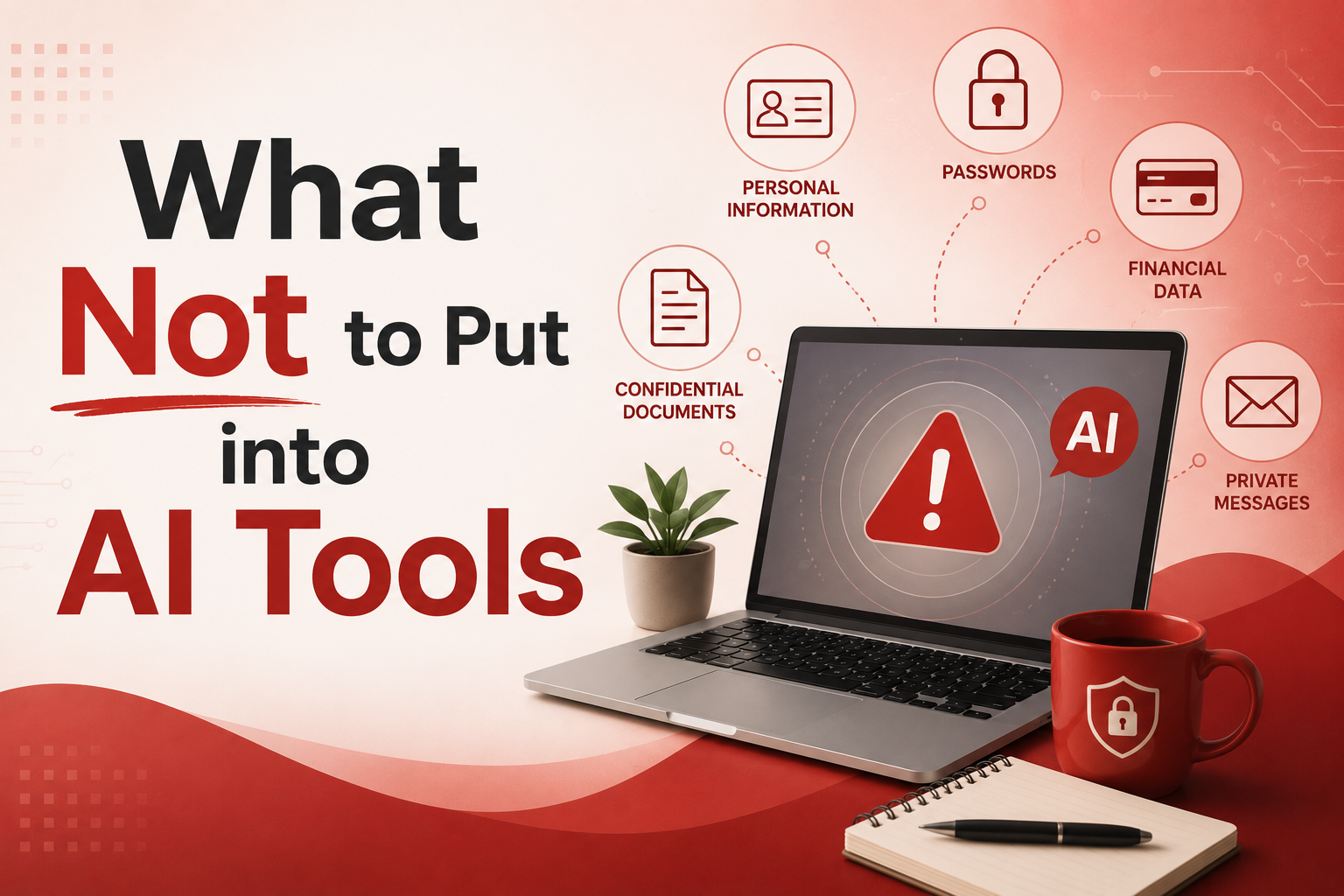
When using AI tools, users should understand what information should remain private, protected, or confidential. This practical guide outlines common types of sensitive content that should not be entered into AI systems, helping learners, educators, families, and professionals use AI more safely and responsibly.
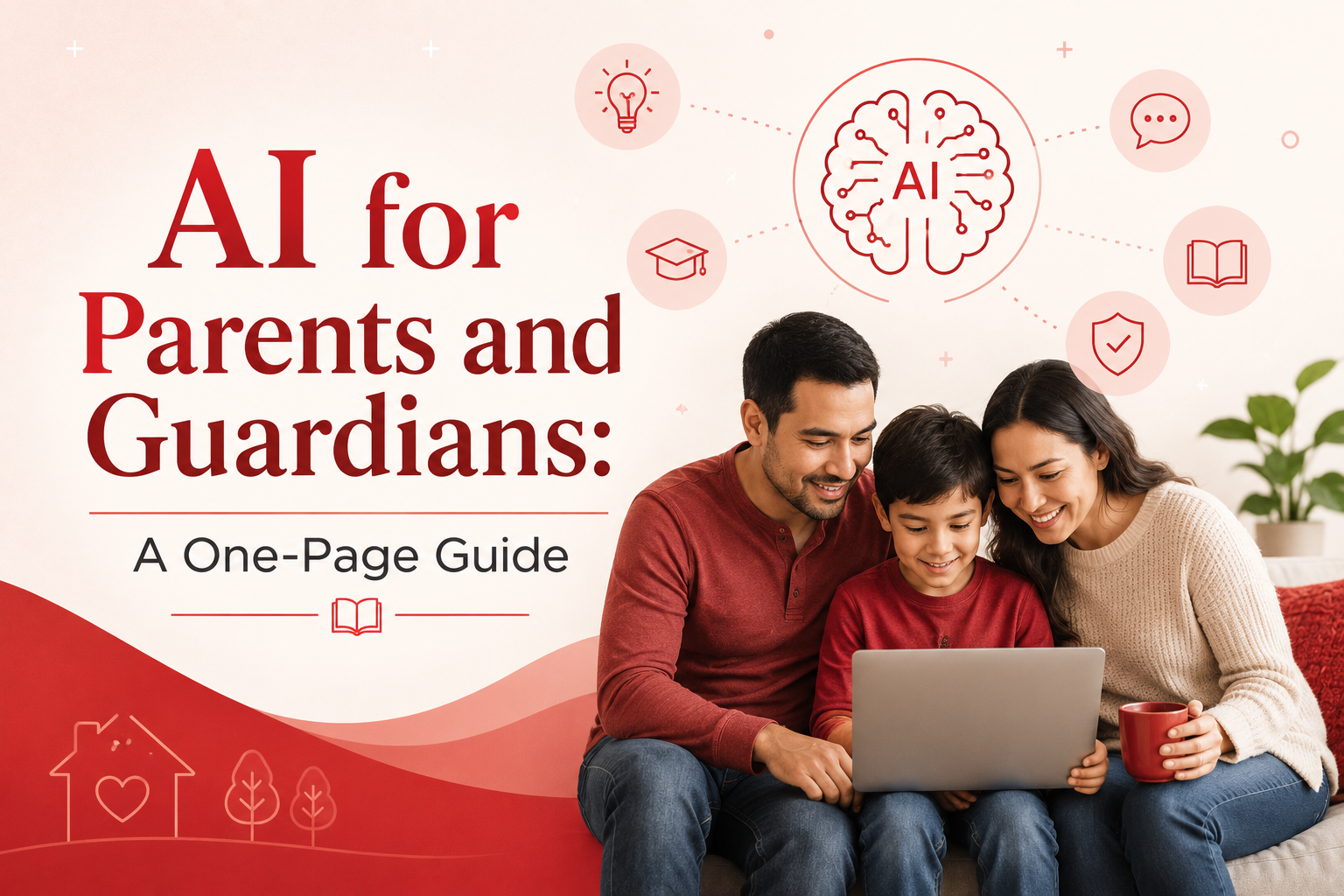
Download this practical, easy-to-read resource designed to help families navigate AI with confidence. This free guide introduces what AI can and cannot do, offers simple safety and privacy tips, and provides healthy guidelines for supporting children’s learning in an AI-driven world.
Digital Tools
The AI Use Decision Guide is an interactive tool designed to help learners, educators, and professionals make thoughtful decisions about when and how to use AI. By working through key questions, users can evaluate whether AI is appropriate for a task, ensure responsible use, and reinforce habits such as verification, disclosure, and independent thinking.
Games
AI Ethics vs. AI Integrity is an interactive game that challenges players to sort real-world examples into ethics or integrity categories. Through play, learners build a deeper understanding of responsible AI use and the habits that support ethical decision-making.
AI Detective Case Files is an interactive AI literacy game for grade school learners. Players investigate real-world scenarios, decide whether AI was used ethically, and determine whether the person showed integrity, helping them develop critical thinking and responsible AI habits.
AI Compass is an interactive AI literacy game that challenges learners to make responsible decisions when using AI. Through a series of realistic scenarios, players choose the best next step, strengthening their understanding of ethics, integrity, transparency, verification, and thoughtful human judgment.
Oops! That’s Not Human is an interactive AI literacy game that helps learners recognize anthropomorphism: the tendency to attribute human feelings, friendships, or authority to technology. Through a series of engaging scenarios, players identify whether a statement reflects feelings, friendship, authority, or a helpful tool, building critical thinking skills and learning to use AI responsibly without mistaking it for a human being.
Feeling or Function? is an interactive AI literacy game that helps learners distinguish between real human emotions, simulated emotions expressed by technology, and the helpful functions that digital tools provide. Through a series of engaging scenarios, players classify statements as real feelings, simulated feelings, helpful functions, or situations where more information is needed, building empathy, critical thinking, and responsible AI literacy skills.
Mission: Anthropomorphism Alert! is an interactive AI literacy game that helps learners recognize anthropomorphism: the tendency to attribute human feelings, friendships, understanding, or authority to technology. Through a series of AI responses, players identify the specific words and phrases that make AI sound human, building critical thinking skills and learning to distinguish between simulated human qualities and the reality of how AI works.
Anthropomorphism Repair Shop is an interactive AI literacy game that challenges learners to fix AI responses that sound too human. As players repair a robot one part at a time, they replace simulated emotions, friendships, authority, and understanding with more accurate descriptions of AI, building critical thinking skills and learning how to use technology responsibly without confusing it with a human being.
Mask or Mistake? is an interactive digital citizenship game that teaches learners how persona prompts can shape AI responses without turning AI into a real person. By classifying prompts as helpful, risky, or harmful, players develop AI literacy skills and learn to recognize when a role supports a task and when it begins to blur the line between a tool and a human relationship.
Worth the Watt? is an interactive AI literacy game that helps learners think critically about when AI is truly needed and when simpler solutions may be enough. Through a series of real-world scenarios, players evaluate whether a task is worth the energy and resources required, building environmental awareness while learning to use AI thoughtfully and responsibly.
AI Energy Challenge is an interactive digital citizenship game that teaches learners how to make intentional decisions about when AI is truly needed and when simpler solutions may be enough. By managing a finite energy budget and prioritizing high-impact uses, players develop sustainability-minded AI literacy skills and learn that responsible technology use includes considering both benefits and costs.
Prompt Power-Up is an interactive AI literacy game that challenges learners to choose the prompt most likely to accomplish a specific task in a single AI interaction. As players compare different prompting strategies, they build critical thinking skills, strengthen prompt-writing techniques, and learn that using AI responsibly means making each request clear, purposeful, and energy efficient.
Energy Leak! is an interactive AI literacy game that helps learners recognize habits that either conserve or waste the energy required to power artificial intelligence. Through a series of everyday scenarios, players identify battery-saving behaviors and energy leaks, building an understanding that responsible AI use includes making thoughtful, efficient requests and avoiding unnecessary interactions.
Fair or Flawed? is an interactive AI literacy game that helps learners recognize when AI responses contain unfair assumptions or stereotypes about people and groups. Through a series of realistic AI-generated statements, players decide whether each response is fair or shows bias, building critical thinking skills and learning to evaluate AI outputs with greater care and confidence.
Missing Voices is an interactive digital citizenship game that teaches learners how to recognize when AI overlooks important viewpoints. By identifying the perspectives that are missing from AI-generated responses, players develop AI literacy skills and learn to evaluate AI outputs with greater empathy, fairness, and awareness of diverse human experiences.
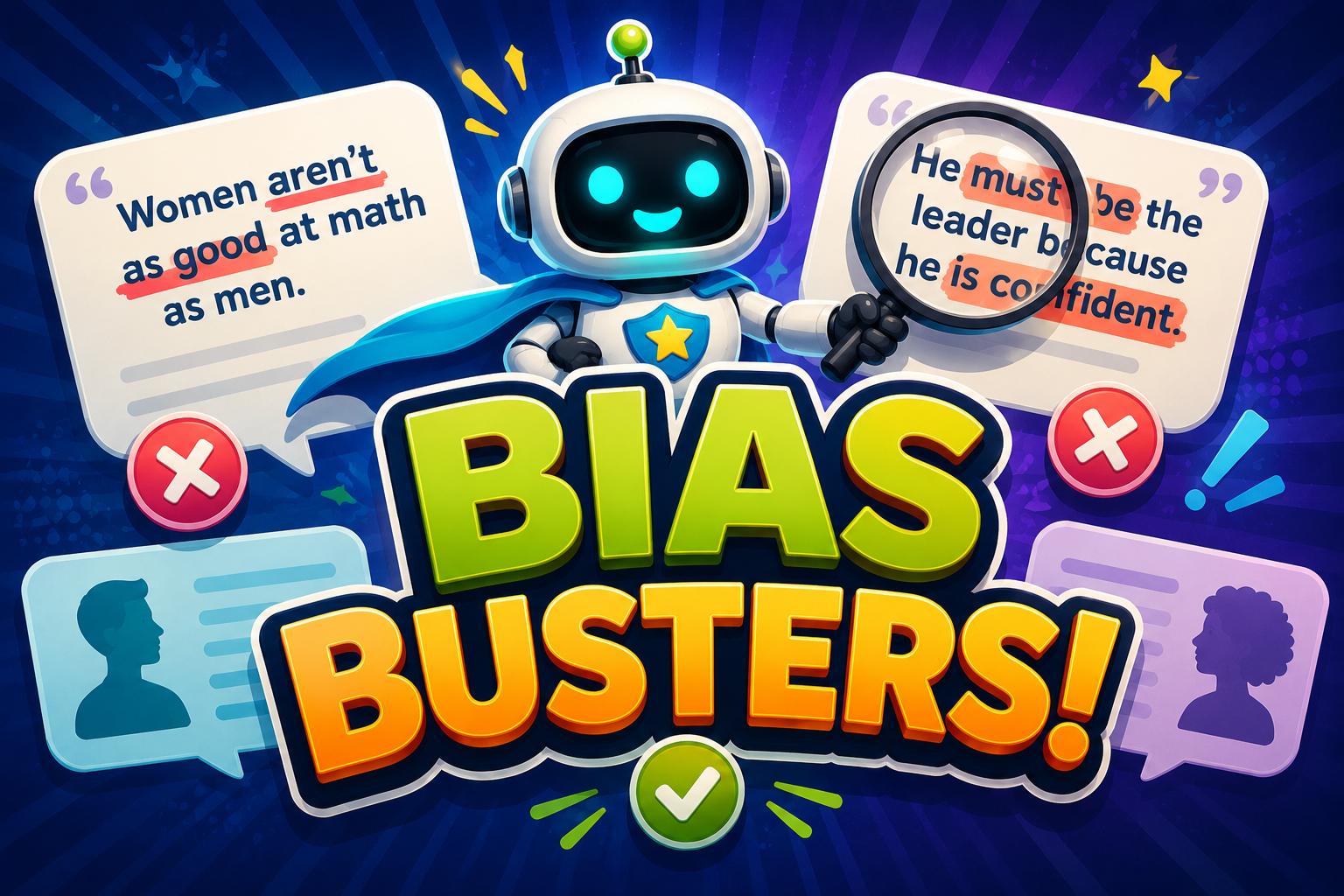
Bias Busters! is an interactive AI literacy game that challenges learners to identify the words and phrases in AI-generated responses that show bias. As players uncover stereotypes and unfair assumptions, they build critical thinking skills and learn that responsible AI use includes carefully examining not only what AI says, but how it says it.
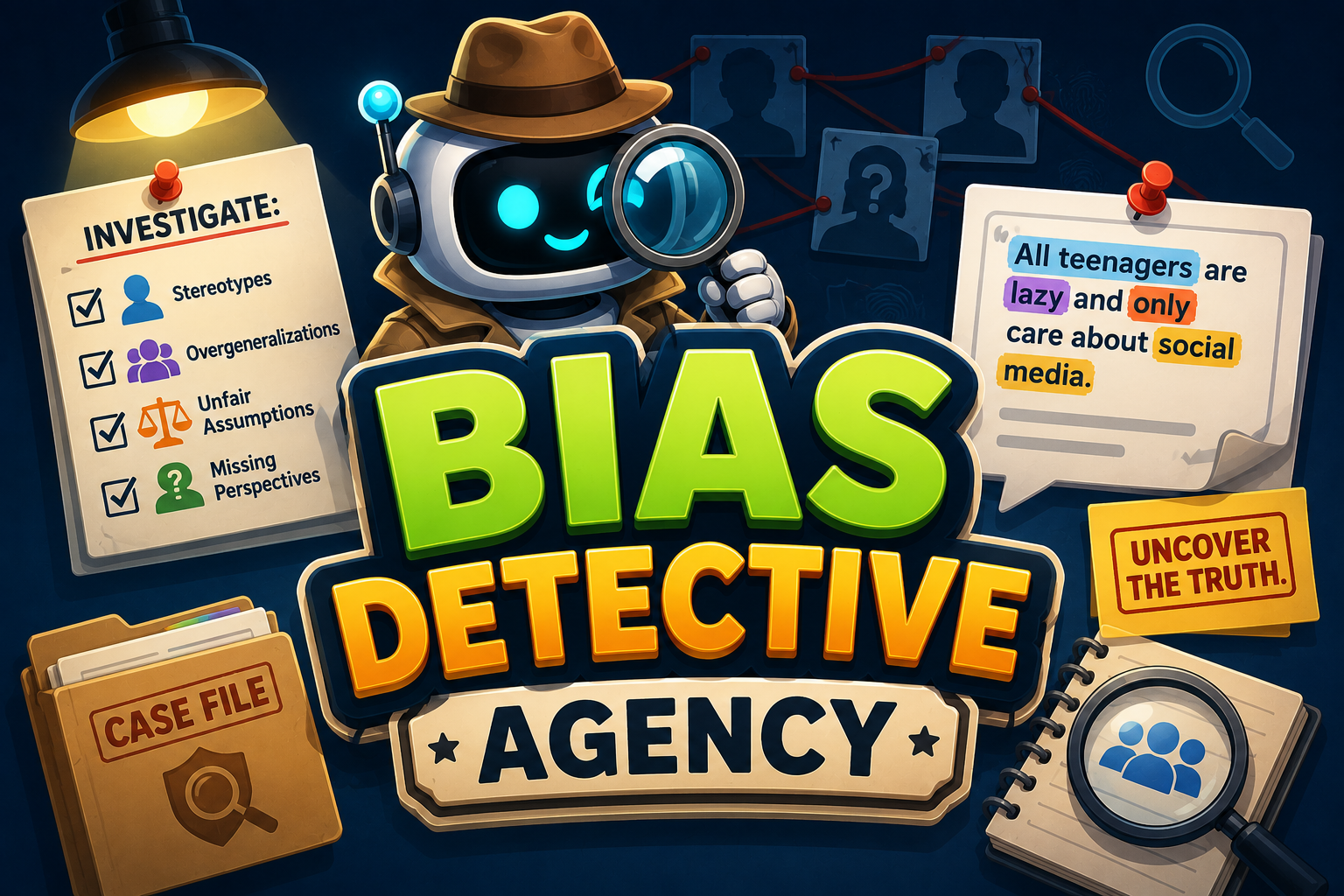
Bias Detective Agency is an interactive AI literacy game that challenges learners to investigate AI-generated responses for different types of bias. By identifying stereotypes, overgeneralizations, unfair assumptions, and missing perspectives, players build critical thinking skills and learn to evaluate AI outputs with greater accuracy, fairness, and confidence.
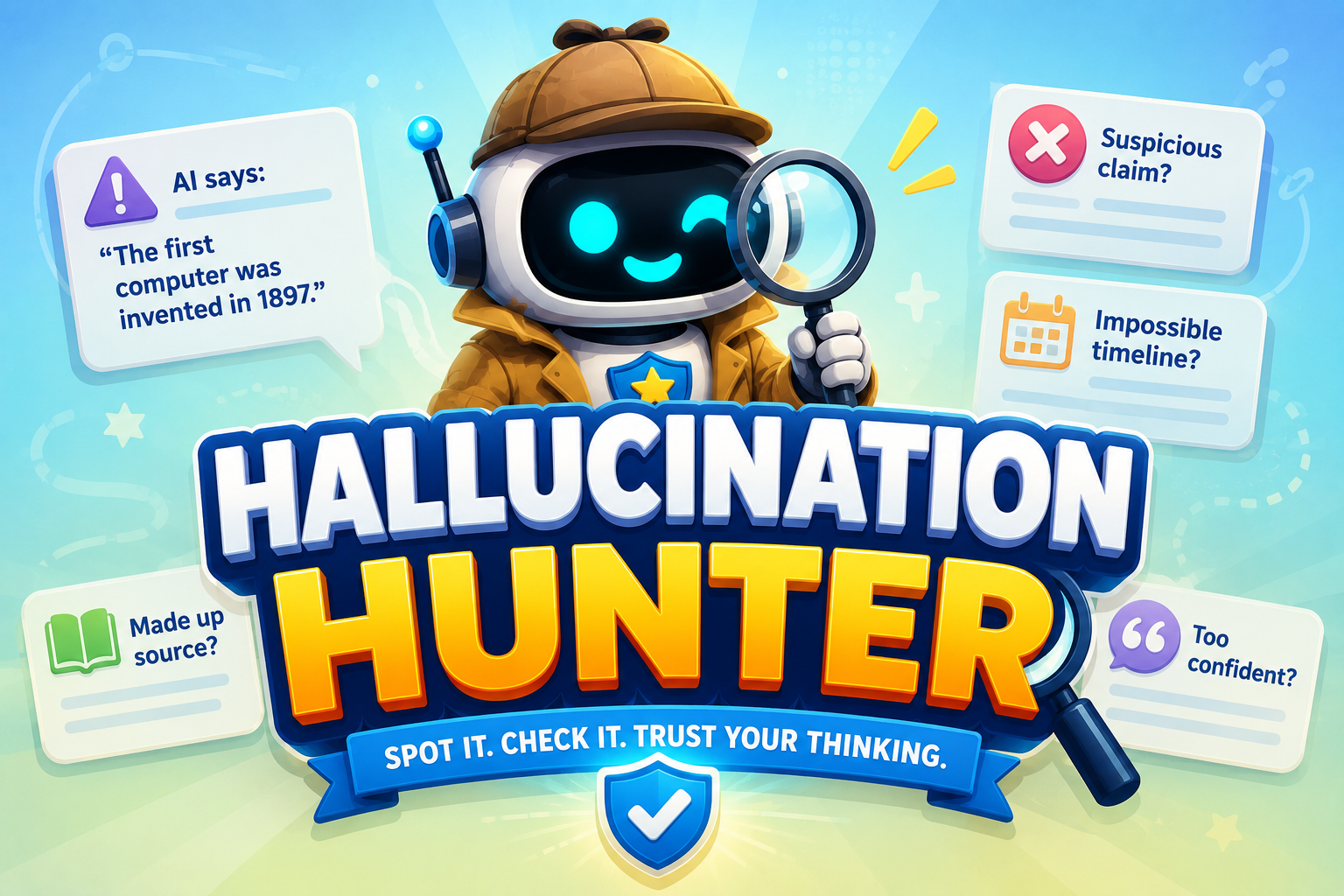
Hallucination Hunter is an interactive AI literacy game that challenges learners to identify the warning signs of AI hallucinations. As players investigate AI-generated responses for suspicious claims, impossible timelines, fabricated sources, contradictory information, and overconfident language, they build critical thinking skills and learn that responsible AI use includes verifying important information before accepting or sharing it.
Spot the Clue is an interactive AI literacy game that challenges learners to identify inaccurate details hidden within otherwise believable AI-generated responses. In each round, players review a response containing two accurate statements and one clearly incorrect claim. By spotting impossible timelines, false associations, scientific inaccuracies, and other suspicious details, learners strengthen their critical thinking skills and practice verifying information rather than accepting confident AI output at face value.
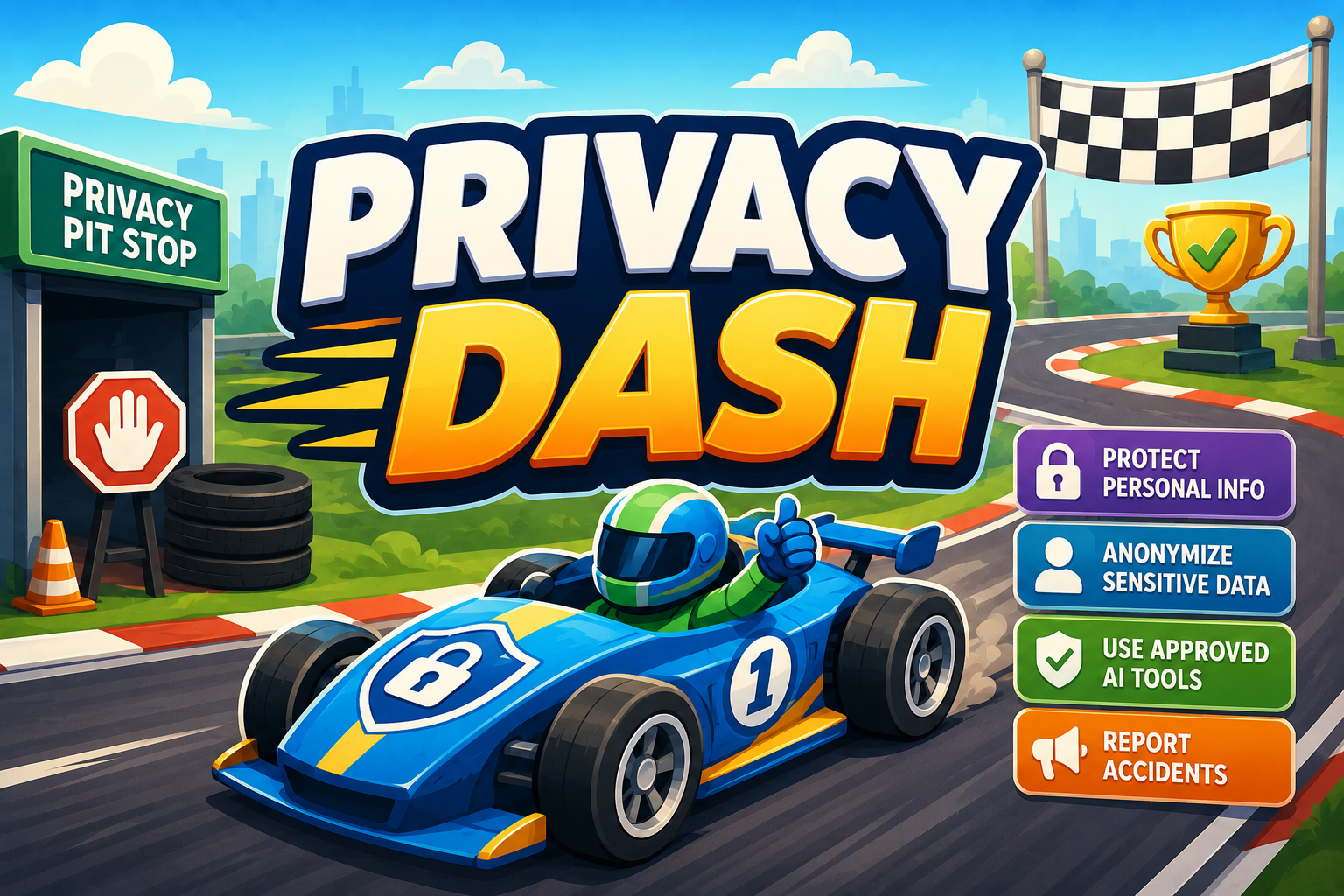
Privacy Dash is an interactive AI literacy game that challenges learners to make safe, responsible decisions about personal, private, and confidential information. In each scenario, players choose the safest response to common privacy risks involving AI tools, such as sharing passwords, customer records, student information, employee data, or identifying details. As learners race forward, they build practical awareness of data protection, anonymization, approved AI use, and the importance of reporting accidental disclosures.